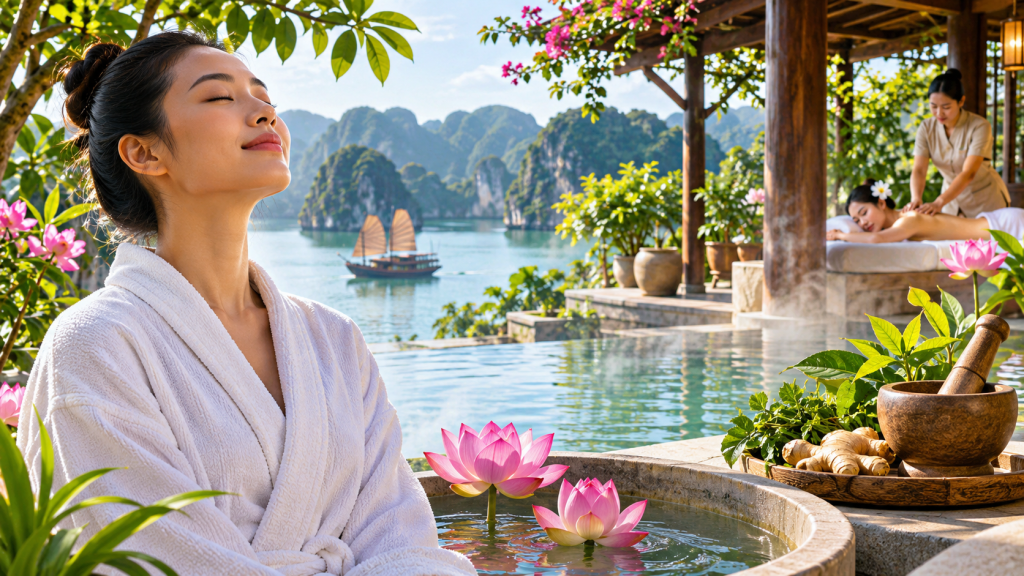
From traditional healing and beauty treatments to modern wellness retreats and specialist healthcare, Asia is witnessing a change in how people travel. Vietnam is increasingly well positioned to participate in this expanding market.
For generations, international tourism has been associated with sightseeing, cultural discovery, relaxation and leisure. Travellers selected destinations for their landscapes, historic attractions, cuisine and hospitality.
Today, another consideration is becoming increasingly important: how people want to feel when they return home.
Wellness tourism is evolving beyond the traditional spa holiday. Travellers are seeking experiences that combine physical wellbeing, mental relaxation, personal appearance, cultural discovery and, in some cases, access to professional healthcare.
This changing relationship between travel and personal wellbeing has also introduced a relatively new expression into the tourism vocabulary: the glowcation.
For Vietnam and its Asian neighbours, the trend presents opportunities extending well beyond hotels and resorts. It also raises important questions about healthcare standards, traditional medicine, commercial transparency and the responsibilities of businesses promoting wellness-related services.
What Is a Glowcation?
The word glowcation combines the ideas of personal radiance or wellbeing and a vacation.
Unlike a conventional holiday that might include an occasional spa treatment, a glowcation places beauty, rejuvenation or wellness experiences at the centre of the journey.
In August 2026, the South China Morning Post examined six international glowcation destinations, highlighting how travellers are increasingly planning holidays around distinctive beauty and wellness experiences.
The concept can encompass several different interests.
Some travellers may seek skincare consultations, traditional bathing experiences, massage, yoga or meditation. Others may be interested in nutrition, fitness, preventive health assessments or longer stays designed around rest and relaxation.
However, there is an important distinction.
A glowcation is a travel concept, not a recognised category of medical treatment. Wellness experiences, cosmetic procedures and specialist medical services have different purposes, risks and professional requirements.
A responsible approach must recognise these differences rather than present every activity as an equivalent route to better health.
Vietnam’s Wellness Tourism Market Is Expanding
Vietnam is emerging as an increasingly interesting destination within Asia’s wellness tourism industry.
A television report on Vietnam’s developing wellness tourism sector recently highlighted how hospitality businesses are moving beyond conventional spa and fitness services.
Hotels are investing in hydrotherapy facilities, thermal treatment areas, meditation spaces and more comprehensive wellness programmes.
Some operators are also developing dedicated retreats that combine accommodation, meals, relaxation activities, traditional practices and professional consultations.
The report illustrates an important change in the hospitality business model.
Wellness is no longer necessarily an additional service offered alongside accommodation and dining. For some properties, it is becoming a principal reason for guests to visit, extend their stays and return.
The commercial implications are significant.
According to IMARC Group’s Vietnam Wellness Tourism Market Report, the country’s wellness tourism market reached an estimated US$5.5 billion in 2025.
The research company projects that the market could reach US$11.9 billion by 2034, representing a compound annual growth rate of approximately 8.74% between 2026 and 2034.
These figures are forecasts rather than guaranteed outcomes, but they suggest substantial interest in the future development of Vietnam’s wellness tourism industry.
For a country already internationally recognised for its hospitality, landscapes, cuisine and cultural heritage, wellness tourism offers another potential area of economic development.
Asia’s Traditional Healing Heritage
Asia possesses an extraordinary diversity of traditional health and wellness practices.
Traditional Chinese medicine, Vietnamese herbal traditions, Japanese bathing culture, Indian Ayurveda and Thai massage all reflect longstanding cultural approaches to personal wellbeing.
Many of these traditions are closely connected to local history, geography, community life and cultural identity.
In southern China, for example, the traditional practices of the Zhuang and Yao communities in Guangxi include herbal bathing and other indigenous healing customs.
Vietnam likewise has a rich heritage of traditional medicine, herbal knowledge and therapeutic practices.
These traditions can contribute to culturally meaningful travel experiences while supporting local communities and preserving knowledge passed between generations.
Nevertheless, cultural authenticity and clinical effectiveness are different questions.
Historical use does not automatically establish that a treatment is safe or effective for a particular medical condition. Herbal preparations may interact with prescribed medicines, and some traditional interventions require qualified practitioners and appropriate medical supervision.
The future of traditional wellness tourism should therefore combine cultural respect with responsible information, appropriate safeguards and realistic claims.
Beauty Tourism and the Growing Importance of Professional Standards
Beauty-related travel has become another visible part of the wider wellness market.
South Korea, Thailand, Vietnam and other Asian destinations attract international interest in skincare, aesthetic services and cosmetic procedures.
Yet beauty tourism includes services with very different levels of risk.
A conventional facial, a dermatologist-administered treatment and cosmetic surgery are not interchangeable experiences.
Where a procedure involves medical intervention, visitors should consider professional licensing, practitioner qualifications, facility standards, informed consent, potential complications and arrangements for follow-up care.
These considerations become particularly important when a patient plans to travel internationally.
A treatment may be completed within a short period, but appropriate recovery and follow-up may require considerably longer.
Travel itineraries should therefore accommodate clinical requirements rather than determine them.
Where Wellness Tourism Meets Medical Tourism
Wellness tourism and medical tourism are related, but they are not identical.
Wellness tourism generally centres on activities intended to support relaxation, personal wellbeing or healthy lifestyles.
Medical tourism involves travelling to obtain professional healthcare, which may include diagnostic assessment, dental treatment, surgery, fertility services or specialist medical care.
The distinction becomes particularly important when tourism businesses promote packages combining medical procedures with leisure experiences.
A patient travelling for surgery has different requirements from a visitor attending a meditation retreat.
Similarly, someone seeking advanced oncology treatment or neurological care requires specialist medical evaluation, appropriate clinical facilities and arrangements for ongoing treatment.
Accommodation, transport and cultural experiences may support the journey, but they must remain secondary to the patient’s medical needs.
This is an area where Vietnam has an opportunity to develop a stronger international reputation.
Through Medical Tourism Vietnam, international visitors can explore information about healthcare services and the practical considerations associated with obtaining treatment in Vietnam.
A patient-first approach requires accurate information, appropriately qualified providers, transparent arrangements and continuity of care.
The Opportunity for Vietnam’s Hotels and Resorts
Vietnam’s hospitality sector has an important role to play in the developing wellness economy.
Hotels, resorts and serviced apartments can provide environments suited to relaxation, longer stays and carefully designed wellness programmes.
Destinations such as Đà Nẵng, Hội An, Nha Trang, Đà Lạt, Phú Quốc and Sa Pa offer different combinations of climate, landscape, cultural experiences and accommodation.
For wellness travellers, these destinations may provide opportunities to combine relaxation with cultural discovery.
For international medical patients, however, accommodation requirements can be more specific.
A patient recovering from a procedure may need accessible facilities, suitable transport, proximity to the treating hospital, accommodation for an accompanying family member and flexibility around follow-up appointments.
Not every resort is suitable for medical recovery, and the appropriate location and duration of stay should be determined with the treating healthcare team.
This distinction creates opportunities for hospitality operators willing to understand the different needs of wellness travellers and medical patients.
It also creates opportunities for responsible collaboration between hotels, healthcare providers and independent patient-facilitation services.
Beyond Vietnam: A Regional Opportunity
The growth of wellness tourism is not confined to Vietnam.
Across Asia, destinations are developing different combinations of healthcare, beauty, traditional healing and wellness experiences.
Japan offers established bathing traditions alongside advanced healthcare services.
South Korea is internationally associated with skincare and aesthetic medicine.
Thailand has extensive experience in wellness hospitality and international medical services.
India combines contemporary specialist healthcare with traditional wellness systems.
China offers both longstanding traditional medicine practices and sophisticated specialist healthcare, including developments in precision diagnostics, oncology and functional neurosurgery.
These destinations should not be treated as interchangeable.
A traveller seeking a traditional wellness retreat has different priorities from a patient considering complex medical treatment.
The challenge for regional tourism and healthcare platforms is to explain these distinctions clearly while helping visitors understand the options available.
Introducing Glowcations Asia
The convergence of wellness, beauty, healthcare and travel provides the context for Glowcations Asia, a regional information and facilitation platform examining these interconnected sectors.
The platform brings together information about Asian destinations, wellness experiences, traditional healing practices, healthcare providers, accommodation and extended-stay opportunities.
Its purpose is not to suggest that all wellness practices are medically effective or that healthcare procedures should be treated as holiday activities.
Rather, it seeks to help visitors explore different services, understand their purposes and make more informed enquiries.
Glowcations Asia is operated by MEDICAL TOURISM VIETNAM LIMITED, incorporated in Hong Kong in May 2026.
The company also operates Medical Tourism Vietnam, which has been active in international healthcare information and patient facilitation since 2011.
The two platforms have complementary roles.
Medical Tourism Vietnam maintains its particular focus on healthcare and international patient enquiries, while Glowcations Asia provides a broader regional perspective on wellness, healthcare, traditional medicine and extended-stay travel.
Both approaches depend upon the importance of accurate information, responsible provider relationships and informed visitor decisions.
Commercial Opportunities Must Be Matched by Trust
The growth of wellness tourism creates potential opportunities for hotels, resorts, healthcare organisations, traditional practitioners, travel businesses and local communities.
However, the sector’s long-term success will depend on more than attractive marketing.
International visitors need clear information about the services being offered, the qualifications of practitioners, applicable prices, cancellation conditions and any relevant commercial relationships.
Promotional material should be distinguishable from independent editorial information.
Where medical treatment is involved, clinical safety and professional responsibility must take precedence over travel convenience or commercial incentives.
Traditional medicine should be presented with respect for its cultural origins, but without unsupported promises of clinical effectiveness.
Wellness tourism will also need to address the practical needs of different visitors, including older travellers, people with disabilities and those managing existing health conditions.
A credible industry should be measured not only by visitor numbers or market growth, but also by the quality, transparency and reliability of the services it provides.
The Future of the Glowcation
The glowcation reflects a wider transformation in international travel.
For some travellers, the attraction of a destination is no longer limited to what they can see, where they can stay or what they can purchase.
Increasingly, the experience may involve relaxation, personal wellbeing, cultural learning, appearance-related services or access to professional healthcare.
Vietnam has considerable potential to participate in this evolving market, supported by its hospitality industry, cultural heritage, natural environments and developing healthcare capabilities.
The wider Asian region offers even greater diversity.
Yet the opportunity should not be reduced to a new marketing expression.
The strongest future for wellness tourism will be built upon authentic experiences, qualified practitioners, transparent information and respect for the different needs of travellers and patients.
A successful wellness journey may enhance the travel experience. A successful medical journey must always begin with appropriate healthcare decisions, patient safety and continuity of care.
That distinction should remain central as Asia’s wellness and glowcation industries continue to develop.
Editorial Note
This article examines developments in Asian wellness tourism, beauty-related travel and international healthcare. Market projections are attributed to their original research source and should not be interpreted as guaranteed future outcomes.
The article is provided for general information and editorial commentary. It does not constitute medical advice or an endorsement of any particular treatment or healthcare provider.
Publisher’s disclosure: The author is associated with Medical Tourism Vietnam and Glowcations Asia, both operated by MEDICAL TOURISM VIETNAM LIMITED.


Leave a Reply