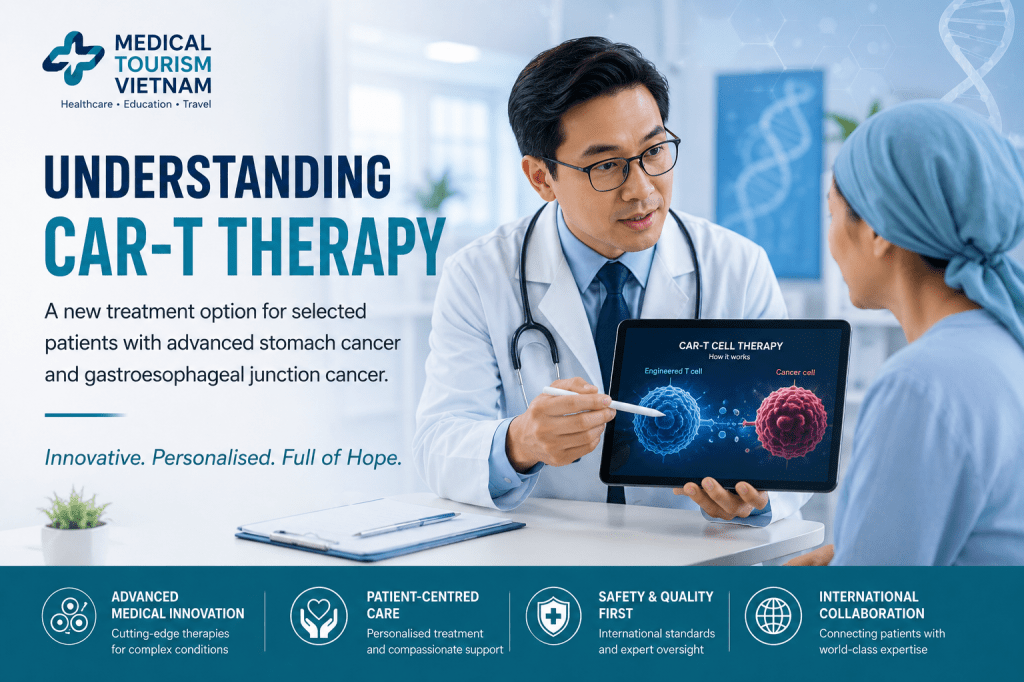
Medical Tourism Vietnam has published a new patient guide explaining one of the most significant recent advances in personalised cancer treatment.
One of the most significant developments in modern cancer care has quietly emerged from China with the approval of the world’s first CAR-T therapy for a solid tumour. While the scientific terminology may sound daunting, the breakthrough represents something much easier to understand: a new treatment option that offers hope for selected patients with advanced stomach cancer.
Until recently, CAR-T cell therapy had been used primarily to treat certain blood cancers. The latest approval marks an important milestone, extending this personalised form of immunotherapy to eligible patients with advanced gastric (stomach) cancer and gastroesophageal junction cancer that express the Claudin18.2 biomarker.
Unlike conventional chemotherapy, CAR-T therapy uses a patient’s own immune cells. These cells are collected, genetically modified in a specialised laboratory to recognise cancer cells, and then returned to the patient’s body to help target the disease more effectively. While the treatment is not suitable for every patient, it represents an important advance in precision medicine and illustrates the rapid pace of innovation taking place across Asia.
Recognising that many patients and families struggle to understand highly technical medical developments, Medical Tourism Vietnam has published a new educational guide explaining CAR-T therapy in straightforward language. The guide covers how the treatment works, who may be eligible, what the treatment journey typically involves, and why China has become a leading centre for advanced cellular therapies.
Rather than promoting a particular hospital or treatment provider, the guide reflects Medical Tourism Vietnam’s commitment to providing balanced, patient-first information that helps readers make informed healthcare decisions.
Read the full patient guide
Readers wishing to learn more can access the complete guide:
As medical innovation continues to reshape healthcare across Asia, developments such as CAR-T therapy demonstrate how emerging treatments are creating new possibilities for patients facing complex and challenging diagnoses.


Leave a comment