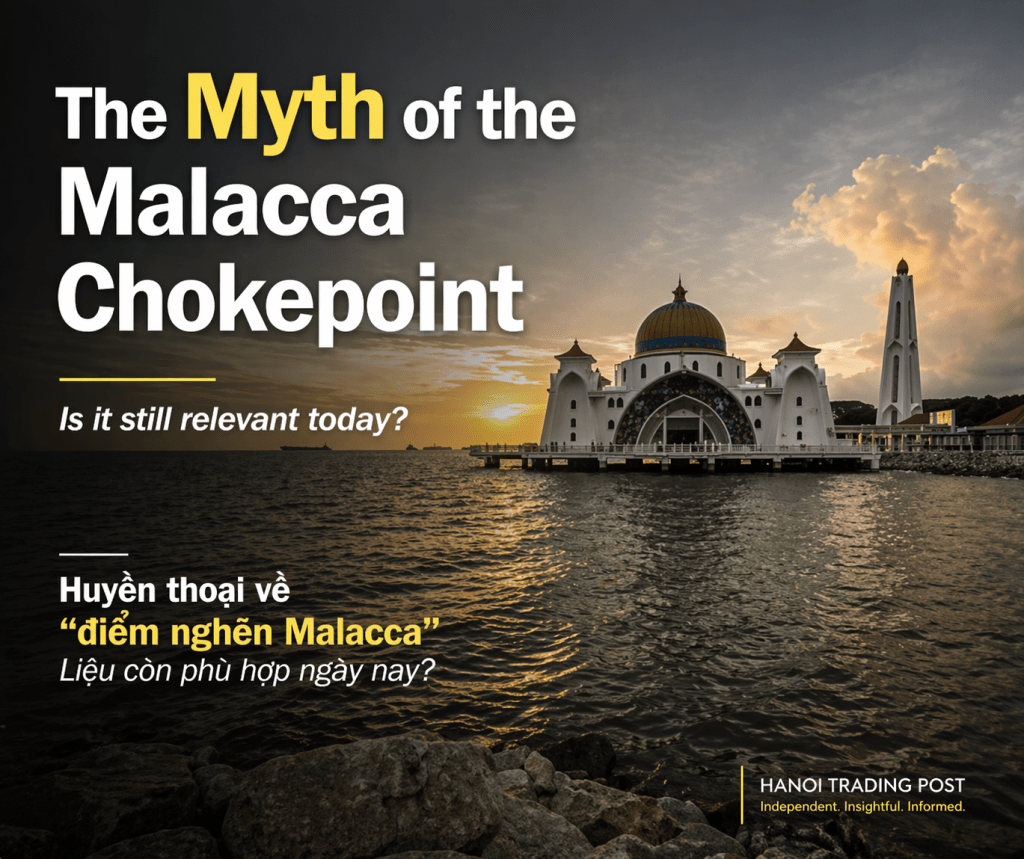
While the US waves its naval truncheon from Indonesia to Australia, Beijing has quietly built land‑based energy and trade routes that no gunboat can close.
Western media outlets have been gleeful in recent days, framing developments through a narrow lens that overlooks shifting geopolitical and energy dynamics across Asia. The real question is not whether a blockade would hurt China, but whether it would be decisive.
The United States signed an agreement with Indonesia that could allow Washington, together with allies like Australia, to effectively block China’s access to the “Strait of Malacca”, the narrow sea lane through which the vast majority of China’s Middle Eastern oil imports once flowed.
The narrative is simple, proud, and laced with a colonial hangover: squeeze China’s maritime throat, and Beijing will choke.
But there is one problem with that narrative. It is about a decade too late and it fundamentally misunderstands what China has already built.
The Unspoken Reality: Gunboat Diplomacy, Dressed in New Clothes
Let us call it what it is. The US‑Indonesia agreement, cheered by the same Western media that once celebrated gunboat policing of the Pearl River, is not about freedom of navigation. It is about power projection. Australia, Washington’s self‑described “deputy sheriff,” has long joined joint naval patrols through the Malacca Strait, the South China Sea, and beyond – a modern iteration of 19th‑century gunboat diplomacy, complete with destroyers instead of paddle steamers [6].
The message to China is unmistakable: the world’s most vital energy chokepoint can be closed by American‑led naval power anytime Washington chooses. Allies like Australia provide basing, overflight rights, and the political cover of a “rules‑based order” that, conveniently, writes the rules.
But gunboat diplomacy only works against nations that remain dependent on the seas. China is no longer such a nation.
China’s Renewable Juggernaut: The First Bypass
As of 2025, China possesses the world’s largest renewable energy system. Official data shows total installed capacity hit “2.34 billion kilowatts (kW)”, making up nearly “60%” of the country’s total power mix [1].
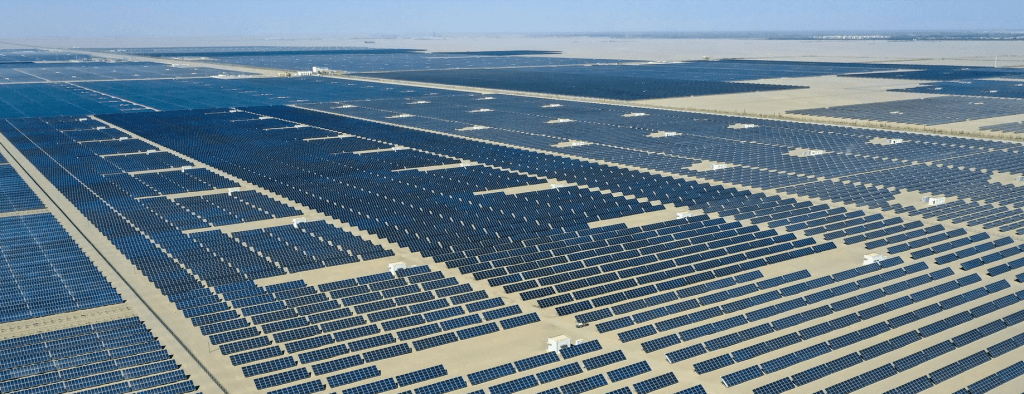
Aerial view of a portion of solar panels at Gansu Dunhuang Solar Park in Dunhuang, Jiuquan City, Gansu Province of China.
Breakdown of China’s renewable energy capacity [1]:
– Solar Power: 1.2 billion kW (+35% YoY) – leading all new additions.
– Wind Power: 640 million kW (+23% YoY), including 47 million kW of offshore wind.
– Hydropower: 450 million kW, including 65.94 million kW of pumped storage.
– Biomass: 47.43 million kW.
For the first time in history, combined wind and solar capacity (1.84 billion kW) surpassed thermal power (coal and gas), now accounting for 47.3% of the total electricity mix [1].
What this means is brutally simple: China no longer needs a steady stream of Persian Gulf tankers to keep its lights on. The energy transition is already well advanced. No gunboat can block the sun or the wind.
The Pipeline Alternative: Russia Pivots East, Permanently
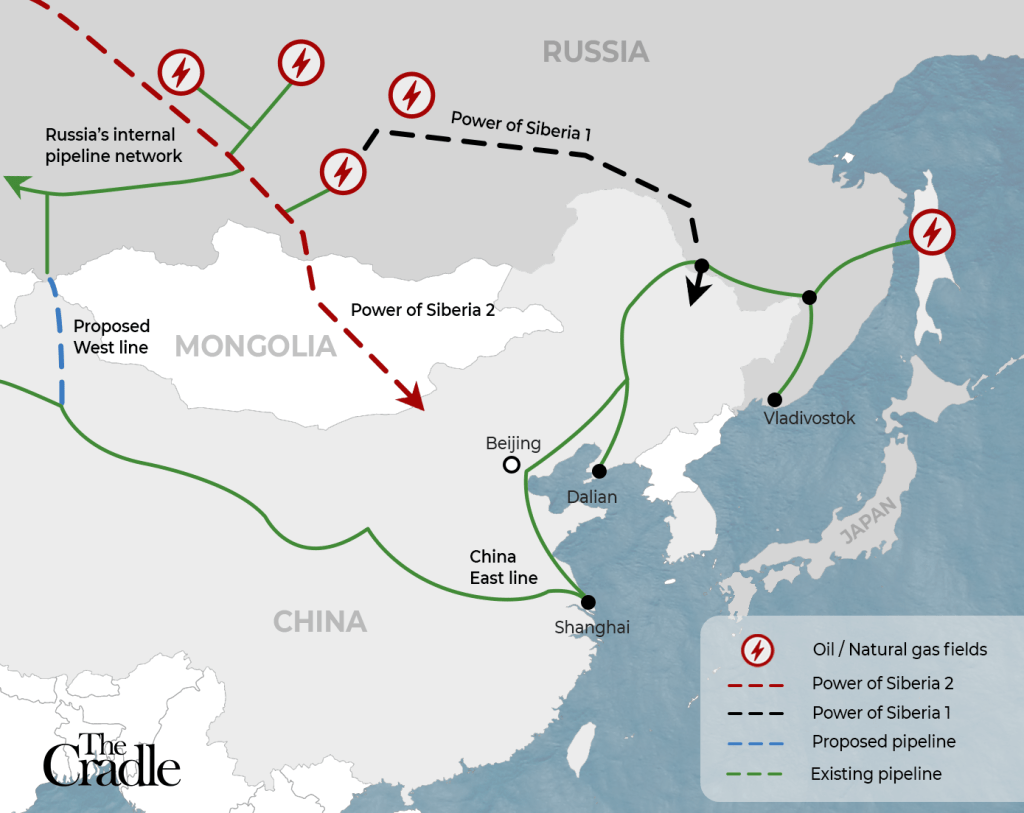
But even for the fossil fuel portion of its economy, China has built a land‑based alternative that no navy can touch. When Europe cut off Russian energy after 2022, Moscow desperately sought new buyers. China was the only market large enough to absorb what Europe had rejected.
The results are staggering:
– Power of Siberia 1 delivered **38.8 billion cubic metres (bcm)** of natural gas to China in 2025, up from 27 bcm in 2024, with planned expansion to 44 bcm [2].
– Power of Siberia 2 – now under construction – will carry 50 bcm per year. Gazprom and CNPC signed a legally binding agreement with a 30‑year supply contract, and the project is included in China’s 2026–2030 five‑year plan [2].
– The Far East Gas pipeline adds another 12 bcm.
– The ESPO oil pipeline delivered 35 million tons in 2022, exceeding contract terms, and has since been expanded.
These pipelines run directly from Russian fields to Chinese territory. They cannot be blocked by the US Navy, by Indonesia, or by Australia’s submarines. They bypass the Malacca Strait entirely – a permanent, overland energy lifeline.
The New Silk Roads: Steel Tracks, Not Sea Lanes
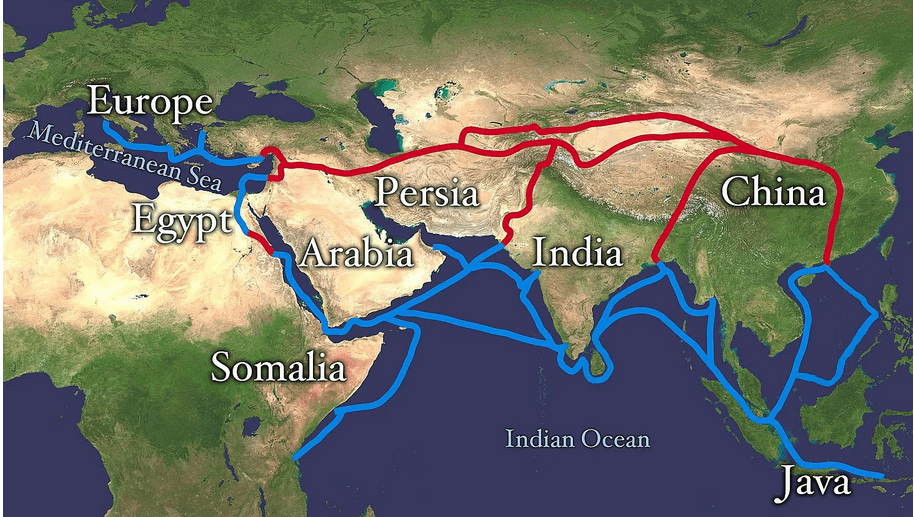
China’s strategy goes far beyond energy. It has been building an interoperable land‑based trade network across Asia reinforcing emerging ASEAN trade and energy corridors, the very continent the US hopes to dominate through naval chokepoints.
China–Iran Railway: In May 2025, the first freight train from Xi’an, China, arrived in Tehran, marking the full operationalisation of a 10,400 km direct rail link. The journey takes just 15 days, a dramatic reduction from the 30‑ to 40‑day sea voyage. Early trains have returned to China loaded with Iranian oil. This is a functioning, all‑weather alternative to the US Navy’s sea‑based deterrent, and it shatters the so‑called Malacca dilemma in plain sight [3].
China–Laos–Malaysia High‑Speed Link: The $6 billion China–Laos Railway opened in late 2021. By March 2025, it had transported over 80 million tonnes of cargo (including more than 18 million tonnes of cross‑border freight) and carried 62.5 million passengers. It serves 19 countries and regions, with over 20,000 international freight trains dispatched. The line is designed as the first segment of a Pan‑Asian high‑speed network running from Kunming all the way down the Malay Peninsula to Singapore [4].
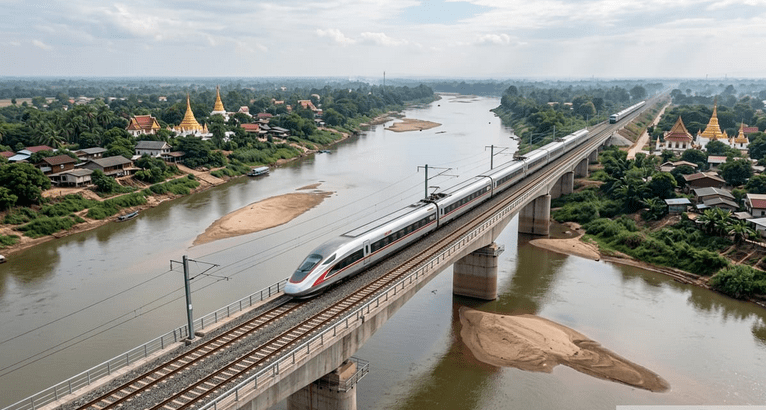
The Kra Canal (and its successor): The long‑proposed Kra Canal across southern Thailand would shorten shipping routes by 1,200 km and bypass Malacca entirely. While the Thai government has ruled out near‑term construction, a powerful lobby of retired Thai generals and academics continues to push for it. And even without the canal, Thailand opened bidding in December 2025 for a $28 billion land bridge project – deep‑water ports linked by road and rail – designed to achieve the exact same goal. Phase 1 is expected to be operational by 2030, and the project is explicitly discussed as a solution to China’s “Malacca Dilemma” [5].
The Petrodollar Vulnerability: The Real Nightmare for Washington
Western media celebrate a naval agreement. But for Washington, an even greater existential vulnerability lurks beneath this energy transition: the slow, irreversible decline of the petrodollar.
The global energy trade, settled overwhelmingly in US dollars, is the bedrock of America’s “exorbitant privilege” – the ability to sustain massive fiscal deficits and project financial power. If China reduces its reliance on seaborne oil imports, and if it settles its new pipeline gas, railway freight, and renewable technology exports in yuan, the demand for dollars will fall.
This is not a distant fantasy. Gazprom has accelerated yuan settlements for its pipeline gas and LNG exports to China. China also encourages major exporters such as Saudi Arabia to accept the yuan for oil trades, directly challenging the dollar‑centered energy order [7].
A naval blockade of Malacca would accelerate this shift. It would scream to every Asian nation: the sea lanes are unreliable. The consequence would not be China’s isolation. It would be the world’s flight from the dollar.
Conclusion: Celebrating Yesterday’s War
Western media can continue to focus on naval agreements and maritime choke points, often reflecting Australia’s evolving strategic posture within a US-led security framework. But the reality is shifting. China has already built the foundations of an alternative system — one that reduces reliance on vulnerable sea lanes and reshapes the balance of power across Eurasia.
China has already immunised itself:
- Renewable energy – reducing the need for seaborne fuel [1].
- Overland pipelines from Russia – securing blockade‑proof oil and gas [2].
- Transcontinental railways – building a steel‑track alternative to every naval choke point [3][4][5].
The real losers of the new energy order are not Beijing. They are the gunboat powers themselves – because their most feared weapon, a closed strait, has been made irrelevant by solar panels, pipelines, and high‑speed rail.
Welcome to the new reality. The gunboats are still there. But the cargo no longer needs them.


Leave a Reply