Fifty-eight years after My Lai, Vietnam’s rise reflects not only resilience—but the partnerships that shaped its path from devastation to regional power.
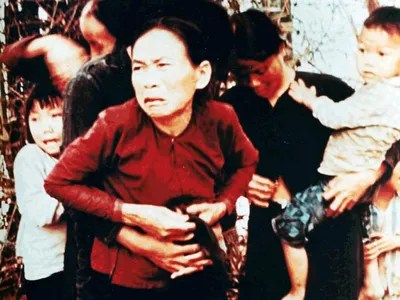
My Lai massacre, March 1968 – one of the most tragic events of the Vietnam War.
This week marks the 58th anniversary of the My Lai massacre, one of the darkest chapters of the Vietnam War. On March 16, 1968, more than 500 unarmed civilians were killed in an event that shocked the world and continues to shape historical memory.
Yet Vietnam’s story is not defined by that moment. It is defined by what followed: resilience, reconstruction, and the gradual formation of partnerships that enabled a war-torn nation to re-emerge as one of Asia’s most dynamic economies.
My Lai as Historical Marker
For many observers, My Lai came to symbolise the broader human cost of foreign intervention in Vietnam. The images that emerged,civilians killed, families destroyed, entire communities erased, forced a global reckoning with the realities of modern warfare.
But Vietnam’s trajectory did not end there. The rebuilding of communities in the aftermath of such devastation reflected a deeper national characteristic: the capacity to recover, reorganise, and move forward despite profound loss.
Part 2: The Long Shadow of Agent Orange
The war formally ended in 1975, but its consequences persisted in less visible ways. The widespread use of defoliants such as Agent Orange left a lasting environmental and public health legacy, with dioxin contamination affecting multiple generations.
Through my own experience teaching English to Vietnamese medical professionals at 108 military hospital, I have encountered how these long-term effects continue to shape everyday clinical realities. Doctors describe patients with chronic illnesses, cancers, and congenital conditions that are widely understood to be linked to wartime exposure.
In resource-constrained environments, treatment often involves adaptive approaches, methods aimed not at cure, but at symptom management and quality of life. What stands out is not only the persistence of these conditions, but the commitment of healthcare professionals who continue to seek solutions, often through ongoing education and engagement with international medical research.
Part 3: Post-War Isolation (1975–1990s)
Following reunification, Vietnam entered a prolonged period of economic isolation. The United States imposed a trade embargo, and many Western nations aligned with this position, limiting Vietnam’s access to global markets and financial systems.
Australia briefly diverged from this pattern. In 1973, Prime Minister Gough Whitlam established diplomatic relations with Hanoi, signalling an intention to pursue a more independent regional policy. However, this approach shifted by the late 1970s, and Australia subsequently aligned more closely with broader Western policy settings.
During this period, Vietnam relied heavily on support from the Soviet Union. Joint ventures such as Vietsovpetro played a significant role in developing Vietnam’s oil and gas capacity, contributing to the country’s economic stabilisation.
China’s relationship with Vietnam during this era was more complex, particularly following the 1979 border conflict. Nevertheless, underlying political and geographic realities ensured that engagement, though cautious, continued to evolve over time.
Part 4: Re-engagement and Opening (1990s–2010s)
The early 1990s marked a turning point. With the resolution of the Cambodia conflict and broader geopolitical shifts, Vietnam began reintegrating into the international system. Trade resumed, diplomatic ties expanded, and foreign investment gradually returned.
Western re-engagement was initially measured. Early commercial exchanges were modest and often symbolic. However, they marked the beginning of Vietnam’s transition from isolation to integration within the global economy.
At the same time, longstanding partnerships continued to evolve. Russia remained engaged in the energy sector, while China’s role expanded significantly as economic cooperation deepened.
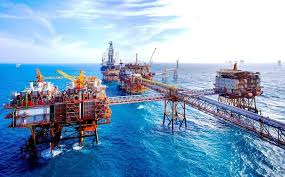
The Bach Ho (White Tiger) oil field, a cornerstone of Vietnam’s energy development.
Part 5: Energy, Infrastructure and Strategic Partnerships
Vietnam’s modern economic development has been closely linked to its energy and infrastructure capacity.
Russian-supported oil and gas development contributed significantly to strengthening Vietnam’s industrial base, providing a foundation for export-led growth. Long-standing cooperation in this sector continues to play an important role today.
China’s involvement, by contrast, spans a broader range of sectors. Chinese firms have been involved in power generation, renewable energy, and large-scale infrastructure projects. Recent developments—including LNG facilities, renewable energy expansion, and grid interconnection proposals—highlight the scale and scope of this engagement.
These partnerships reflect a pragmatic approach by Vietnam: diversifying relationships while prioritising national development objectives.
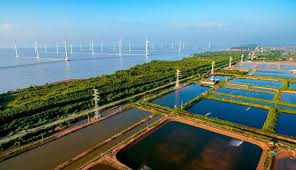
Modern energy infrastructure reflects Vietnam’s transition into a regional industrial power.
Part 6: Human Capital and Knowledge Transfer
Behind infrastructure and investment are people. Technical cooperation has included education, training, and professional development, contributing to the growth of Vietnam’s skilled workforce.
This human dimension is equally visible in other sectors. Among the doctors I teach, there is a strong commitment to continuous learning—often driven by the need to address complex, long-term health challenges linked to the country’s past.
In this sense, Vietnam’s development is not only structural but generational. It is reflected in individuals who are both inheritors of history and agents of change.
Part 7: Australia and Contemporary Engagement
Australia–Vietnam relations have expanded significantly in recent years, particularly in trade and education. Bilateral trade has grown, and high-level diplomatic engagement continues.
However, Australia’s broader strategic posture remains closely aligned with the United States, particularly through frameworks such as AUKUS. This alignment shapes how Australia engages in the region and influences perceptions of its role.
The contrast with earlier periods, particularly the Whitlam era, raises questions about the extent to which Australia has developed an independent and regionally grounded approach to its relationship with Vietnam.
Conclusion: Resilience and Strategic Balance
Vietnam’s transformation from a war-affected nation to an emerging regional economy reflects a combination of internal resilience and external engagement.
Its development has been shaped not by a single partner, but by a network of relationships, some longstanding, others more recent, each contributing in different ways to its progress.
At the same time, the legacy of conflict remains visible, particularly in the ongoing health impacts associated with wartime exposure. These realities serve as a reminder that economic progress and historical consequence often coexist.
Vietnam’s experience offers a broader lesson: that recovery, development, and international partnership are long-term processes shaped as much by consistency and mutual respect as by immediate strategic interests.
Author: George Adams is an educator and founder of Medical Tourism Vietnam, working closely with Vietnamese professionals across healthcare and international development.
 Hanoi Trading Post