What begins as a narrative can end as a war.
From the outset, much of the Western political response—including that of Penny Wong has rested on a single, repeated premise: that the events of October 7, 2023 constituted an “unprovoked attack,” and that everything which followed must therefore be understood as legitimate self-defense.
But this premise, while widely asserted, is not beyond scrutiny.
There remain questions, inconsistencies, and omissions in how October 7 has been framed and politically mobilised questions that have largely been set aside in favour of narrative clarity over analytical depth. That choice has had consequences.
Because this framing has become the moral and diplomatic foundation for what is now widely described as the “war on Gaza.”
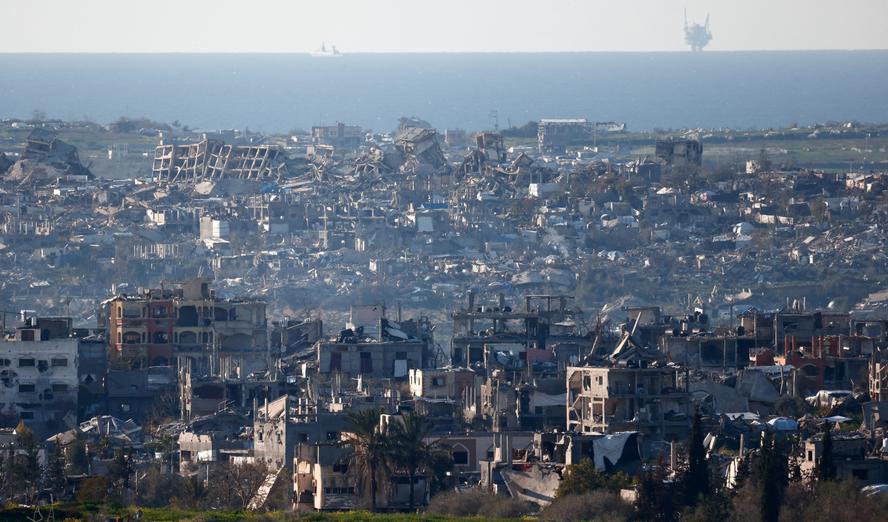
A War Measured in Civilians
Since October 2023, the scale and composition of casualties fundamentally challenge the idea that this is a conventional war.
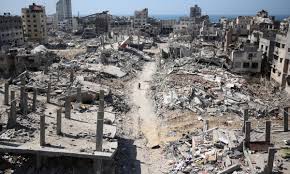
In Gaza, more than 72,000 people have been killed, including over 49,000 women and children—over 70% of verified deaths. At least 20,000 children have been killed, representing nearly 2% of Gaza’s entire child population. These figures, drawn from health authorities and international agencies, are widely understood to be undercounts, with thousands still missing under rubble.
In Lebanon, the conflict has expanded with over 1,000 deaths, including nearly 200 women and children, and warnings from UNICEF that child casualties are rising at a “horrifying rate.”
This is not collateral damage at the margins of war.
It is a pattern in which civilians—particularly women and children—constitute the overwhelming majority of victims.
The Legal Fault Line: Is This a “War”?
The phrase “war on Gaza” is widely used—but deeply contested.
The United Nations and the International Court of Justice recognise Gaza as part of the Occupied Palestinian Territory. Under the Fourth Geneva Convention, an occupying power carries clear legal obligations to protect the civilian population.
This creates a fundamental tension.
If Gaza is occupied, can this be meaningfully described as a war between equal sovereign actors? Or is it more accurately understood as a siege, a form of collective punishment, or conduct now being examined in international legal proceedings as potentially genocidal?
These are not rhetorical questions. They are active legal questions.
From Gaza to Lebanon to Iran: One Conflict, Not Three
What is now unfolding across the region is not a series of disconnected crises.
It is a single, integrated conflict system:
- Gaza as the humanitarian and political flashpoint
- Lebanon as an expanding second front
- Iran as the axis of direct state confrontation
Actions in one theatre are explicitly linked to reactions in another. Escalation is no longer localised it is systemic.
Yet Australian policy continues to treat these arenas as analytically separable, allowing support for one set of actions while expressing concern about their consequences elsewhere.
The Expanding Civilian Pattern
The human cost is not confined to Gaza or Lebanon.
Across the region including inside Iran itself, civilians, and particularly children, have been repeatedly exposed to violence and insecurity. Reports of incidents involving schoolgirls in Tehran and other Iranian cities whether through direct attacks or unexplained poisoning campaigns, underscore a broader and deeply troubling trend.
While the attribution and scale of some of these incidents remain contested, their cumulative significance is clear:
from Gaza, to Lebanon, to Iran, civilians, especially the most vulnerable are increasingly central to the human cost of escalation.
When civilian suffering is invoked selectively, highlighted in some contexts, downplayed in others, it ceases to be a universal principle and becomes a political instrument.
The Economic Reality No One Is Addressing
Beyond the battlefield, the consequences are already cascading through the global economy.
Energy infrastructure strikes across Iran and the Gulf have disrupted oil and gas flows. LNG supply has been significantly reduced, with long-term impacts expected. Fertiliser production, dependent on natural gas has been hit, driving up global food costs. Critical inputs such as helium, essential for semiconductors and medical imaging, have also been affected.
As one analysis notes, this is no longer simply an oil shock it is a supply chain breakdown with delayed but far-reaching consequences .
The result will not be confined to the Middle East.
It will be felt in grocery bills, energy prices, and healthcare systems worldwide—including in Australia.
Yet this dimension is almost entirely absent from the political framing offered to the public.
The Contradiction at the Centre of Policy
Australia’s position, as articulated by Wong, rests on two parallel claims:
- that support for actions targeting Iran is justified on security grounds
- that Australia is deeply concerned about civilian suffering, particularly in Lebanon
Both statements cannot be held without tension.
Because the same strategic alignment that supports escalation also produces the humanitarian outcomes being lamented.
To express concern about displacement and civilian deaths while supporting the architecture of escalation that generates them is not a balanced position.
The Question That Cannot Be Avoided
If there are unresolved questions about how October 7 has been framed—questions that have been set aside rather than examined—then the moral certainty built upon that framing becomes far less secure.
What has followed is not a contained act of self-defence, but a “war on Gaza” that has killed tens of thousands of civilians, displaced millions, and triggered a widening regional conflict stretching from Lebanon to Iran, with global economic consequences now emerging.
You cannot avoid the questions at the beginning and remain credible about the consequences at the end.
 Hanoi Trading Post
Leave a comment