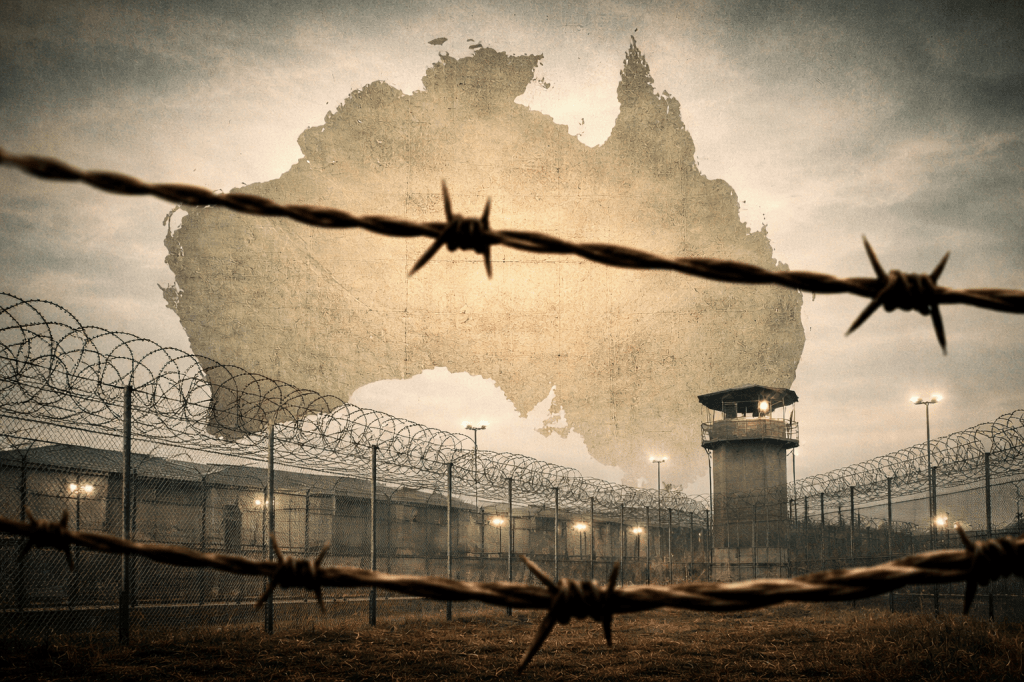
Australia’s border regime has come to symbolise deterrence over protection.
Australia’s debates over refugees and Muslim immigration are often framed as questions of border security or social cohesion. In reality, they expose something deeper and more uncomfortable: the lingering afterlife of a colonial mindset in a world that has already moved on.
From the early 20th-century White Australia policy (National Museum of Australia) to today’s offshore detention regime, the country’s immigration history has repeatedly circled back to the same anxiety – who belongs, and who decides. The “Pacific Solution”, first introduced in 2001, externalised asylum processing to places like Nauru and Papua New Guinea (Australian government policy history; Refugee Council of Australia), deliberately placing distance – legal, geographic and moral – between Australia and those seeking protection. It was sold as deterrence, but functioned as exclusion by design (Human Rights Watch; UNHCR reporting).
When Labor Prime Minister Kevin Rudd came to office in 2007, he initially dismantled this system. Yet in 2013, facing domestic political pressure, he reinstated offshore detention in an even harder form, declaring that anyone arriving by boat would never be resettled in Australia, even if found to be a genuine refugee (Australian government announcement, July 2013). That moment marked a bipartisan turn towards a model of migration control based less on protection than on punishment and symbolic toughness.
These policies have not remained uniquely Australian. Variations of border externalisation now appear in parts of Europe, where asylum responsibilities are shifted onto transit states and peripheral countries (EU-Turkey deal; Libya agreements; European Commission statements). The logic is the same: treat human displacement as a logistical problem to be contained, rather than as a political and humanitarian consequence of wars, interventions, economic disruption and climate stress (UNHCR; IOM) – many of them linked, directly or indirectly, to Western power.
Meanwhile, the social consequences of this mindset continue to surface at home. Recent incidents in Sydney, where police interrupted Muslim prayer at a public demonstration, reverberated well beyond Australia, sparking anger in Muslim communities in Indonesia and Malaysia (Indonesian and Malaysian media reporting). The episode was read not simply as a question of crowd control, but as another sign of how Muslim civic presence is too easily treated as suspect or conditional.
At the political level, figures such as Pauline Hanson have long channelled these anxieties into blunt, racialised rhetoric. Her attacks have not been confined to Muslims, but have also targeted Asian communities, including Chinese and Vietnamese Australians. When such language is normalised in public debate, it reinforces the idea that some groups remain perpetually provisional – tolerated, perhaps, but never fully at home.
(Example: SBS reporting on Hanson’s remarks and the Race Discrimination Commissioner’s response: https://www.sbs.com.au/news/article/race-discrimination-commissioner-condemns-pauline-hansons-remarks-on-muslims/a49gig1xd)
Over recent months, this tension has taken on another, more troubling dimension. Several Greens politicians at both state and federal level have faced abuse, threats and, in some cases, physical attacks over their outspoken criticism of Israel’s conduct in Gaza and what they see as Western double standards. The contrast is difficult to ignore. Governments have mobilised moral outrage quickly and unequivocally over Ukraine and Iran, yet speak in far more cautious, hedged terms when it comes to Palestinian civilian suffering. From much of Asia, this asymmetry does not look like careful diplomacy; it looks like selective morality, filtered through strategic alliances and old hierarchies of whose lives matter more. The Albanese government’s reluctance to confront this pattern directly, or to robustly defend the space for dissenting voices in parliament, risks reinforcing the very perception it should be working to dismantle: that Western liberal values are applied unevenly, and that some criticisms of power are tolerated only up to a point.
This is where Australia’s domestic debate intersects with a much larger global shift.
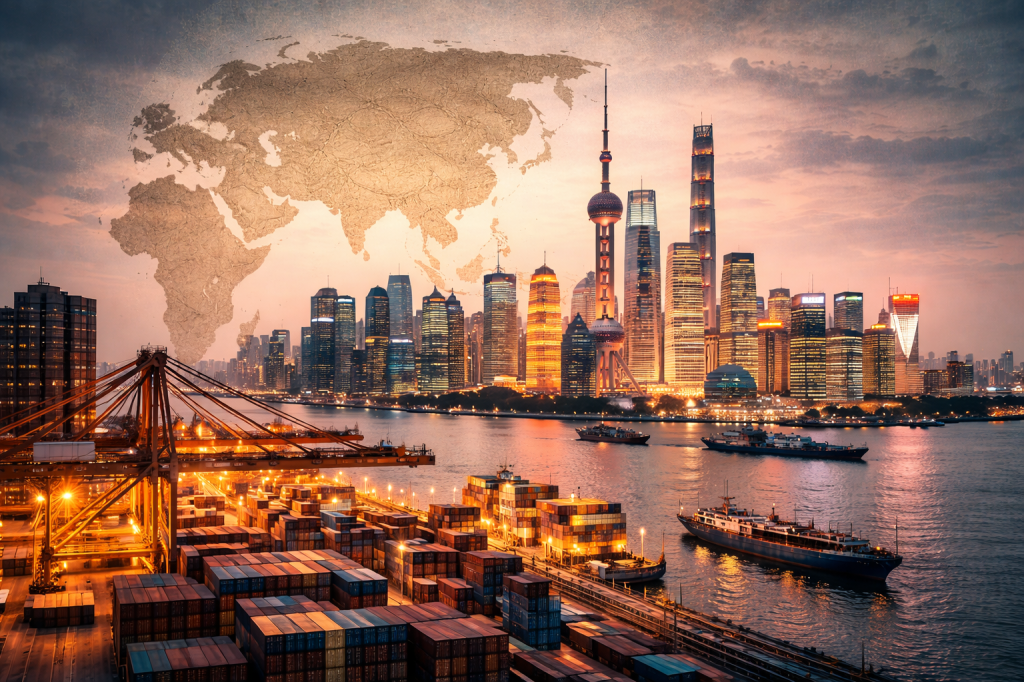
The centre of global economic gravity has shifted decisively towards Asia.
We are already living in what is routinely called the Asian century. The centre of gravity of global growth, trade, manufacturing and technological development has moved decisively eastward. Asia is no longer a “region” to be managed from afar; it is one of the principal engines of the world economy and a central arena of global politics in its own right.
Yet much Western strategic thinking still operates as if this shift were incomplete or temporary.

Old power frameworks confront a living, working Asia they no longer define.
Institutions that shape policy narratives about Asia remain embedded in an older intellectual architecture, one in which Asia is something to be analysed and contained rather than a set of societies fully capable of defining their own futures. This is not colonialism in its 19th-century form, but it is unmistakably colonial in its logic.
The symbolism matters. When a white Western political figure such as Kevin Rudd moves from enforcing some of the world’s harshest asylum policies to leading prominent US-based Asia-focused policy institutions, it inevitably raises questions about who gets to interpret Asia, and on whose terms. Whatever the personal intentions, the structure itself reflects a lingering hierarchy of narrative authority – one that sits uneasily with the realities of a genuinely multipolar world.
(Asia Society leadership profile: https://asiasociety.org/policy-institute/honorable-kevin-rudd)
In practice, many of these institutions do not reduce tensions in the region. They often normalise rivalry, militarise language and turn coexistence into competition. They translate strategic anxiety into respectable policy prose, reinforcing a zero-sum view of the future at precisely the moment when shared challenges – from climate change to economic instability and pandemic risk – demand cooperative frameworks.
The same pattern is visible in refugee policy. Offshore detention, externalised borders and deterrence-first strategies do not address why people are moving in the first place. They manage the optics of displacement while leaving its causes untouched. Wars, regime-change interventions, proxy conflicts and economic dislocation continue to produce refugees, while Western politics focuses on how to keep them out of sight.
If Australia, Europe and the United States are serious about stability in the 21st century, they will need to do more than harden borders and refine deterrence. They will need to confront the colonial hangover in their own thinking – the assumption that security comes from control, that order comes from hierarchy, and that other regions are problems to be managed rather than partners to be respected.
Peace in a post-Western, multipolar world will not come from repackaging old imperial habits in technocratic language. It will come from accepting, at last, that the West no longer manages Asia – and does not need to.
 Hanoi Trading Post
Leave a comment