(Editor’s note: This article is a work of satire. It uses humour and exaggeration to comment on recent political developments and should not be read as factual reporting.)
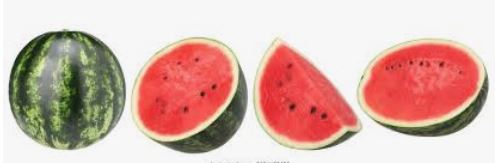
BRISBANE — In a landmark display of legislative consistency, the Queensland government has confirmed it is drafting new laws to ban the sale, display, and private cultivation of the common watermelon (Citrullus lanatus). The move comes just days after the state moved to outlaw the historical phrase “from the river to the sea” (as reported by The Guardian), a decision officials now admit has created an unexpected compliance problem in the fresh produce aisle.
“The symbolism is, unfortunately, undeniable,” a weary senior policy adviser from the Department of Justice and Attorney-General’s office told reporters, nervously eyeing a fruit bowl. “Green skin, pale flesh, red interior, black seeds—it’s basically a full-colour reproduction of a banned ideological concept. We can’t have one without the other. It’s about consistency.”
The announcement has sent shockwaves through the agricultural and hospitality sectors, with the Queensland Farmers’ Federation calling an emergency meeting.
“This is a billion-dollar industry,” said federation chair Alaine Macron, wiping his brow. “We’ve spent decades breeding for sweetness, size, and seedlessness. We didn’t realise we also had to breed for political compliance.”
Supermarkets Brace for a ‘Fruit Blackout’
Major supermarkets are now scrambling to comply. A leaked internal memo from Woolworths reportedly instructs produce managers to prepare for “Operation Fruit Shield,” involving opaque partitions in the fresh food section to obscure watermelons from public view.
“We’re exploring a range of options,” a Coles spokesperson said carefully. “This could include relocating watermelons to click-and-collect, or selling them pre-sliced in sealed black containers. We remain committed to keeping our aisles free from unintended political expression.”
IGA stores, already stretched by supply chain issues, are reportedly considering placing a single, sad, forbidden watermelon in a locked cabinet and charging customers $5 for a brief, furtive look.
The Great Australian Brunch in Peril
The hospitality industry is also bracing for impact. Cafes from the Sunshine Coast to the Gold Coast are hastily rewriting menus. The popular “Grilled Haloumi and Watermelon Salad” is expected to be rebranded as “Grilled Haloumi with Seasonal Red-and-Green Gourd Composition.”
“We’re devastated,” said a Brisbane barista, pausing mid-pour on a flat white. “Our watermelon and mint cooler was our bestseller. Now it’s the ‘Summer Refresher of Ambiguous Heritage.’ It just doesn’t move product the same way.”
There are also concerns about the future of the Australian picnic. Queensland Police have confirmed they are considering a dedicated “Fruit and Vegetable Compliance Unit” to monitor parks and beaches for seditious gatherings involving sliced fruit.
Home Gardeners on Notice
Perhaps most controversially, the draft legislation is expected to target home gardeners. Growing a watermelon in your backyard could soon be classified as an act of political protest.
The government has not yet commented on what this means for the humble zucchini, but botanists warn it may be only a matter of time before its similarly shaped cousin falls under suspicion.
“It’s a slippery slope,” warned Dr Chrome Dome, a political satire expert at the University of Queensland. “Once you start policing fruit, where do you stop? A truss of cherry tomatoes could be seen as a cluster of forbidden ideas. A bunch of red grapes might represent a gathering of dissenters. Absurd, yes—but also the only logical endpoint of absolute consistency.”
The ‘Common-Sense’ Exemption
As backlash grows, there are whispers the government is searching for a “common-sense exemption.” One backbencher, speaking on condition of anonymity, suggested watermelons might be allowed provided they are cut in a way that disrupts the colour pattern.
“Maybe a spiral cut. Or a dice,” the MP explained. “The key thing is you can’t see all the colours at once. And you definitely can’t say its name in public. ‘Watermelon’ is out. You’ll have to ask for ‘that big green thing’ at the shop.”
Asked whether this system of fruit surveillance and linguistic policing might be seen as hypocritical, given the original ban’s stated goal of consistency, the MP looked puzzled.
“Hypocritical? No, no. This is about having a very clear, very firm, and very workable policy. A policy that’s easy to understand and—hang on, is that a mango? I love mangoes. Mangoes aren’t banned, are they? They’re not… politically charged?”
At the time of publication, the Member for Noosa was reportedly seen urgently Googling the colour palette of Mangifera indica.
 Hanoi Trading Post
Leave a comment