
The La Gan offshore wind project is distinguished not only by its colossal scale but by its foundational commitment to being a model of modern, responsible infrastructure. Moving beyond the simple calculus of clean energy generation, its developers at Copenhagen Infrastructure Partners (CIP) and their local partners are implementing a proactive environmental stewardship plan that treats ecological management as a core component of engineering excellence and long-term value creation.
This approach transforms potential environmental challenges into opportunities for mitigation, monitoring, and even net-positive impact, securing the project’s social license to operate and de-risking its future.
Proactive Mitigation: Engineering with Ecology in Mind
From the outset, the project is designed to minimize its footprint through precision and advanced technology:
- Seafloor Intelligence: Comprehensive seabed surveys using sonar and geophysical mapping ensure turbine foundations and cable routes avoid sensitive benthic habitats like coral reefs and seagrass meadows, which are crucial for marine biodiversity.
- Silencing the Noise: The loud process of pile-driving foundations poses a temporary risk to marine mammals. La Gan is committed to employing Noise Mitigation Systems, such as bubble curtains—a ring of air bubbles around the pile that can reduce underwater noise transmission by up to 90%—protecting marine life during critical construction phases.
- Avian Corridors: Detailed ornithological studies track bird and bat migration patterns. This data directly informs the final turbine layout, creating safer flight corridors and minimizing collision risks, a standard practice for world-class wind farms.
From Challenge to Opportunity: The Artificial Reef Effect
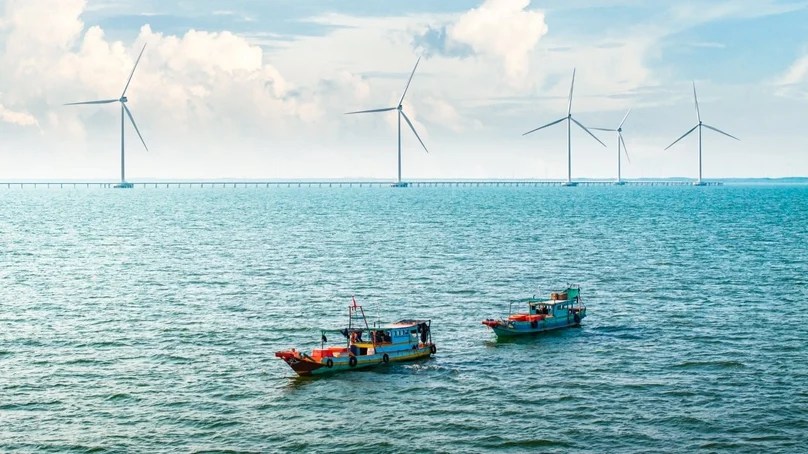
A fascinating long-term ecological benefit emerges post-construction. The submerged turbine foundations and scour protection (layers of rock at the base) inevitably become colonized by mussels, barnacles, and corals. This creates new complex artificial reef ecosystems that attract fish, crustaceans, and other marine life. While not a replacement for natural reefs, this effect can enhance local biomass and biodiversity, turning energy infrastructure into de facto marine habitats. Studies at existing European wind farms have shown these areas can become productive fishing grounds, presenting future opportunities for synergistic use with local fisheries.
Strategic Business Value: Why Responsibility Matters
For the business and finance community, this rigorous environmental framework is a critical strategic asset, not just a compliance cost.
- Risk Mitigation: Proactive management prevents costly delays from legal challenges or regulatory pushback.
- Financing Advantage: It aligns with the stringent ESG (Environmental, Social, and Governance) criteria demanded by international lenders and institutional investors, ensuring access to capital.
- Community & Longevity: Transparent engagement with coastal communities and demonstrable care for the local environment build public trust. This “social license to operate” is intangible but vital for the project’s smooth execution and its secure, uninterrupted operation over a 25-30 year lifespan.
In essence, La Gan is pioneering a holistic blueprint for Vietnam. It demonstrates that the nation’s energy future can be built on a foundation where economic ambition, technological innovation, and environmental responsibility are not in tension, but are mutually reinforcing pillars of sustainable growth.
 Hanoi Trading Post
Leave a comment